"Even as a student, you can make a really important and meaningful contribution to safety in German airspace and bear responsibility."
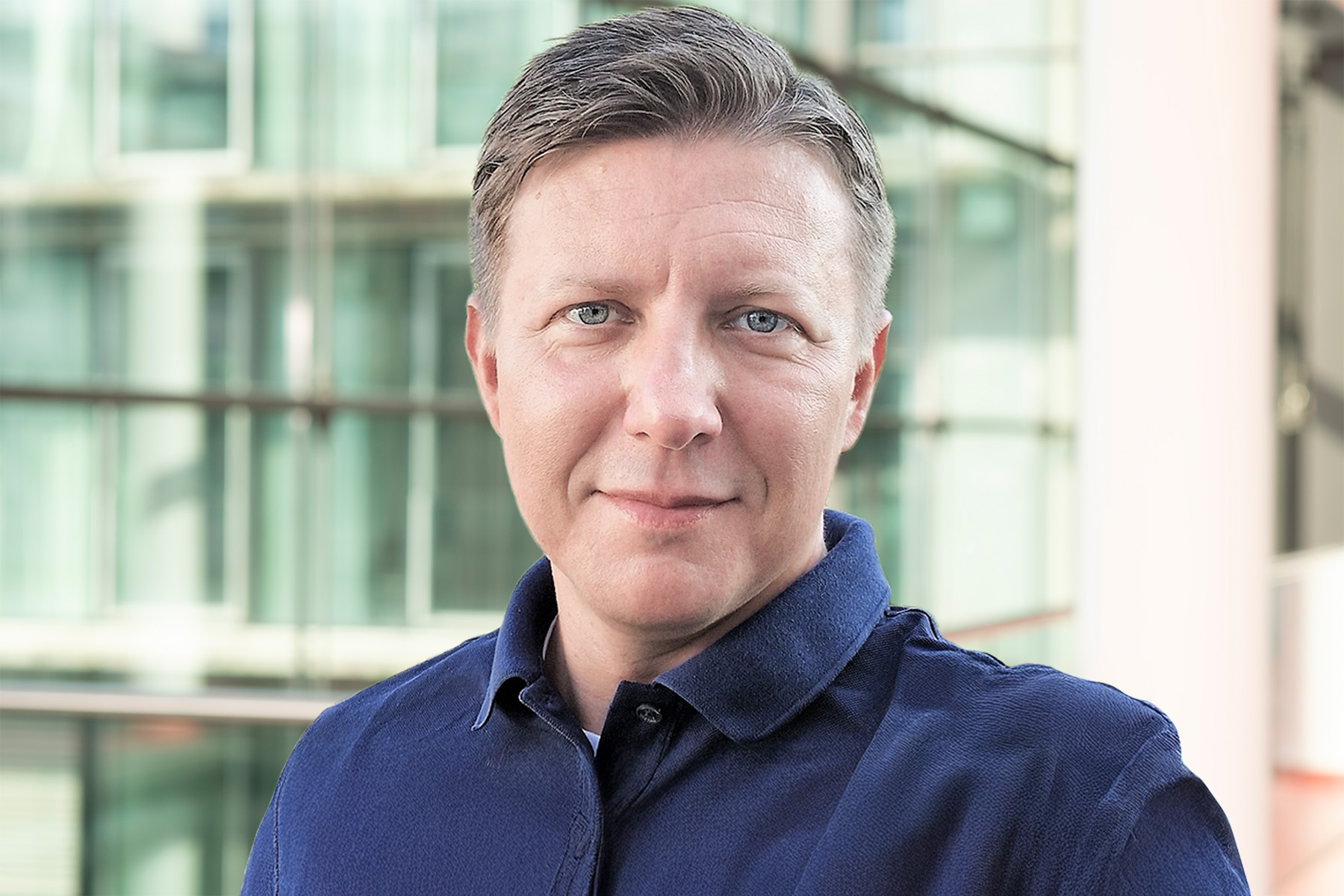
Tobias Hebgen, dual student of electrical engineering and information technology, air navigation services engineer

The best investment for your future
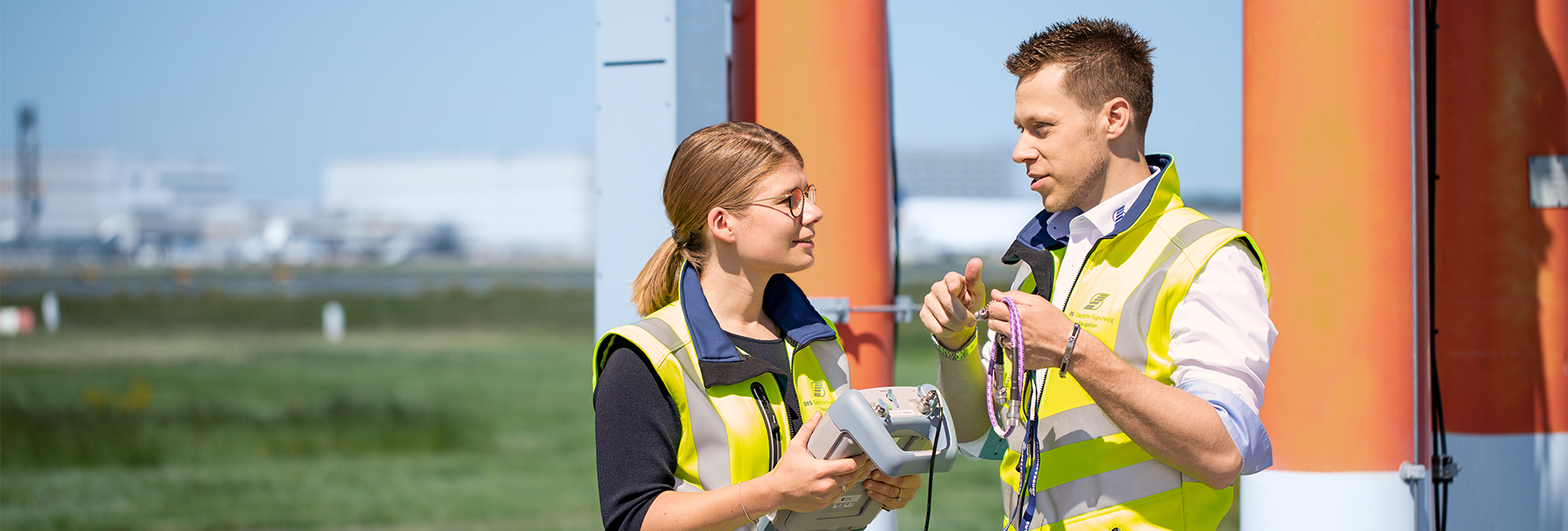
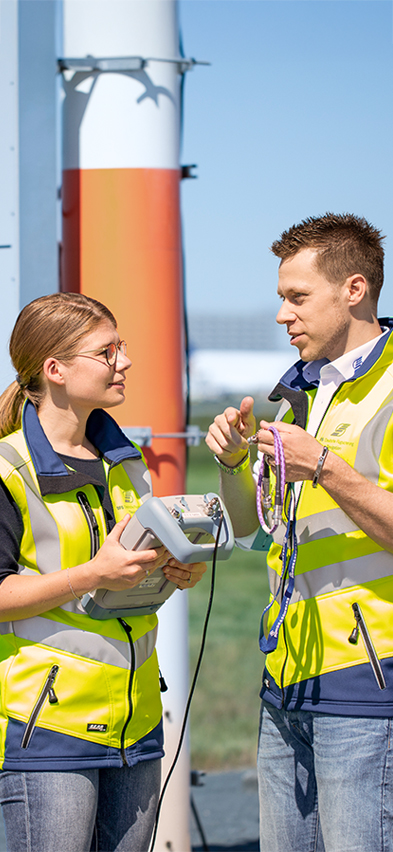
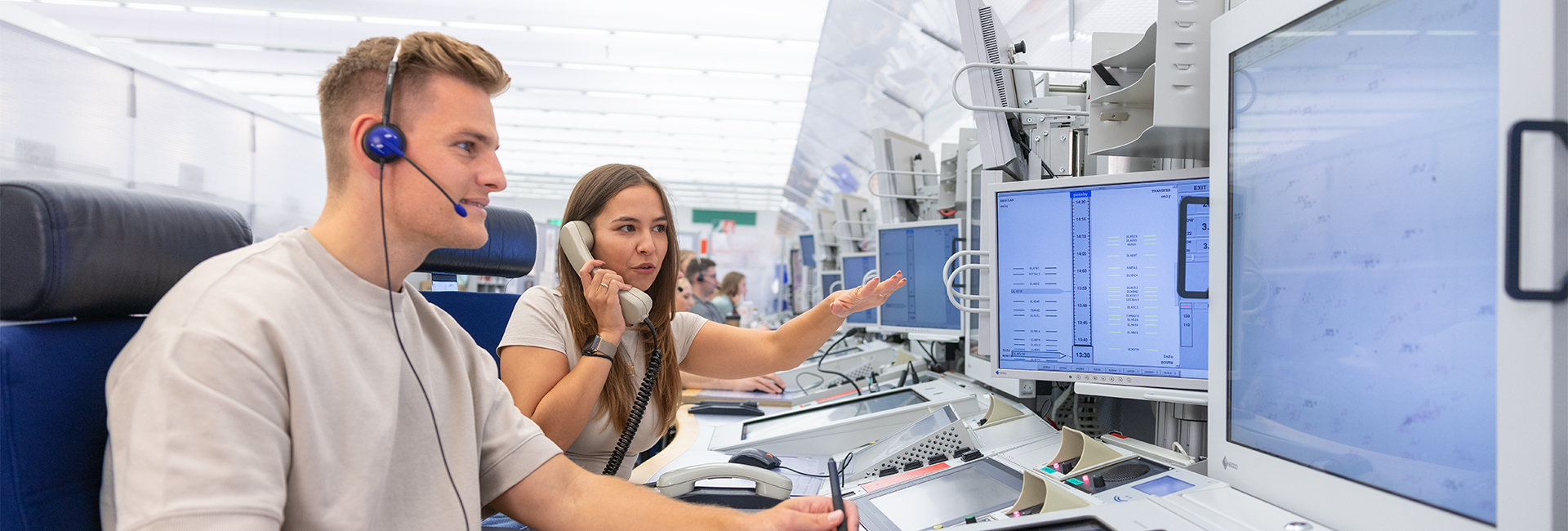
Are you keen to use state-of-the-art technology and contribute to safety in aviation? If that resonates with you, then join us in ensuring the reliable operation of radar, communication and instrument landing systems, while also developing the next generation of air traffic control technology with us.
In your air traffic control dual course of studies, we will ensure that you are prepared for this by combining the requisite theory with practical implementation. With the systems you supervise you will, for example, ensure smooth processes on airport runways, sufficient separation between aircraft in the air and that aircraft weighing several tonnes touch down on the runway with precision down to the nearest metre.

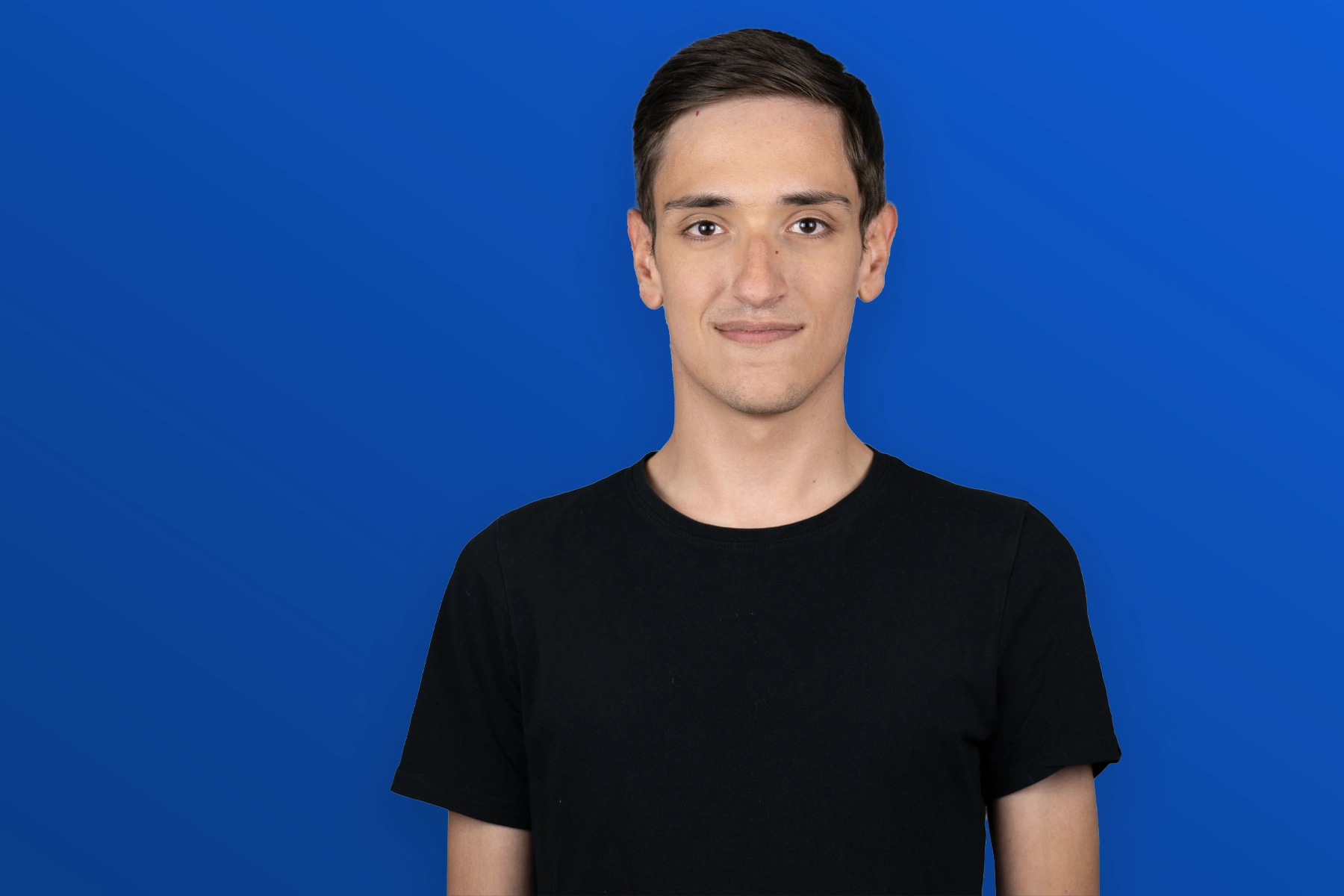
Tobias Hebgen, dual student of electrical engineering and information technology, air navigation services engineer

During the first 3 semesters of your theory phases at Darmstadt University of Applied Sciences, you will initially acquire a broad range of basic knowledge in mathematics, physics, electrical and high-frequency engineering, as well as programming. You will then deepen your expertise in communication technology with a focus on air traffic control technology.

During the semester break, when you are not attending any lectures, you will gain valuable practical experience at one of our branches throughout Germany. You can then put your specialist knowledge into practice and use radar and navigation technology to keep the skies over Germany safe, together with our experts. You will receive personal and professional support from a dedicated contact in our training team. If you are keen to learn more about the exciting duties and the degree course, please sign up for our online taster seminar:
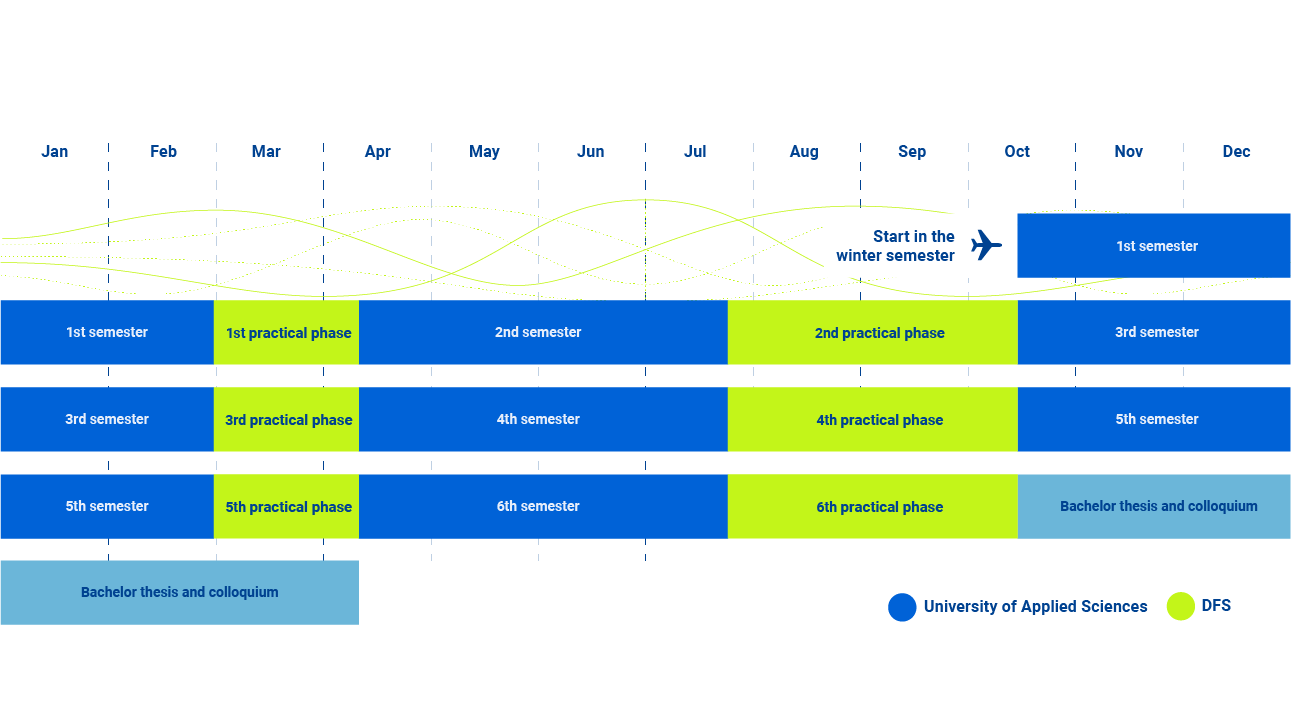
1st practical phase
Systems and infrastructure: Here, you will gain an overview of the technology and systems at DFS and also go on exciting excursions.
2nd practical phase
From now on, you will support your department in its day-to-day operations and supervise the first project of your own.
3rd practical phase
After completing your basic studies, you will familiarise yourself with air traffic control technology at one of our DFS sites throughout Germany.
4th practical phase
At another branch, you will take a closer look at our systems. Your focus here will be on navigation, surveillance and communication.
You are now the home stretch of your dual course of studies. You will now set the course for your future with us based on your strengths.
Take off in one of the following destinations:
Technical genius: Ensure the smooth operation of our navigation systems.
Organisational talent: Get involved in our product management.
Innovative mind: Incorporate your ideas into our research and development activities.
Working with you and our experienced support team, we will find the ideal solution for your personal strengths and interests.
5th & 6th practical phases
In the final phases, you will get involved in your own projects and contribute your expertise to a technical paper.
Bachelor thesis
Your dual course of studies is concluded with a bachelor thesis in your chosen area.
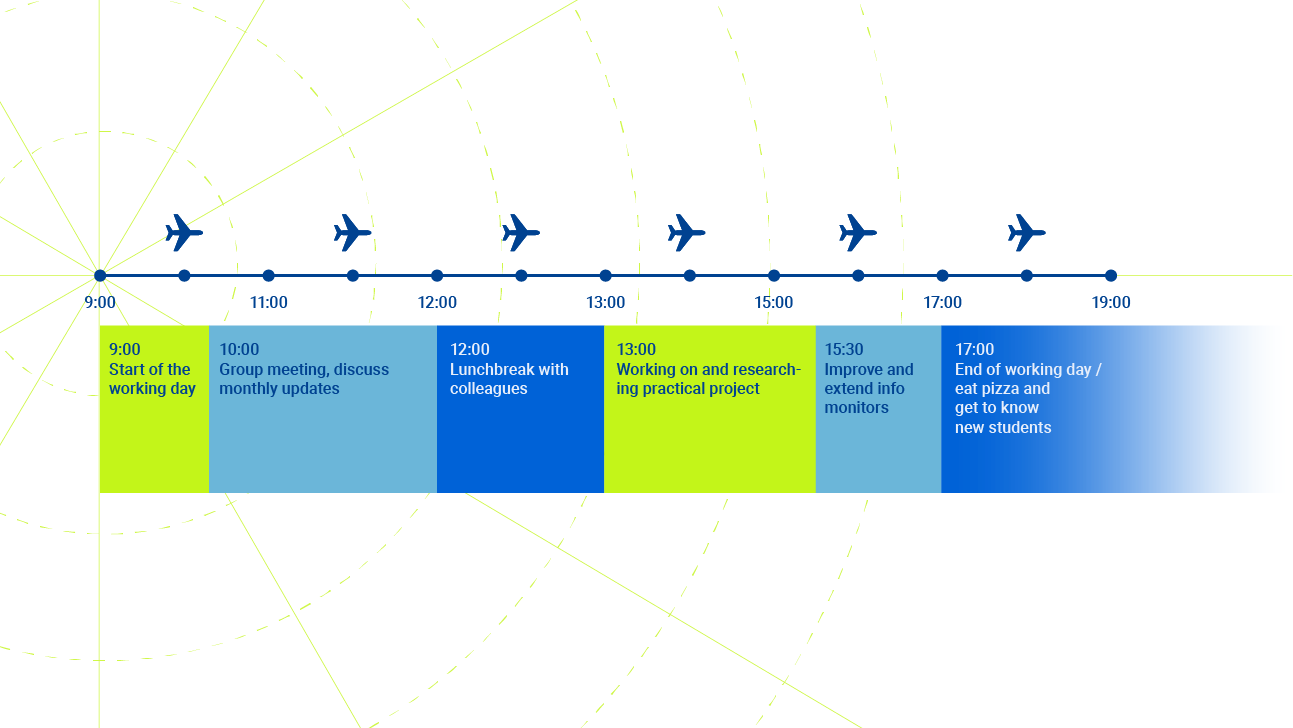
06:40 – Off to work
Set off from home to the DFS Campus.
06:50 – Arrive at DFS
Park in garage P1 at the DFS Campus.
06:55 – Arrive
Arrive at the working position in the SMC (System Management Centre), briefly disinfect the work surfaces, grab a coffee from the vending machine.
07:00 – KOSYS briefing
The KOSYS application coordinates all system interventions on technical ANS facilities and other technical facilities. I make a note of important shutdown procedures and other similar work on a piece of paper.
When available, I mark NBS entries as read and understood. NBS is the New Briefing System, which is used to announce special events or changes.
07:20 – Briefing with a colleague from the early shift
Clarify past and upcoming measures.
07:40 – Open the working position
Open working position in the nDL tracking system (newDailyLog).
Until 12:00
Monitor all air situation radars throughout Germany. Air situation radars are the radars that detect aircraft in the air. Coordination of work on radar facilities. When working locally on site, the digital POC of the system is handed over to the engineer colleague on site. The POC (point of control) assigns control rights over the individual subsystems in the overall system.
12:00 – Lunch break
I eat the meal I prepared at home before coming to work – chicken with rice and vegetables, followed by a second coffee. I can also be reached by telephone during my break.
By 15:30 – Radar facilities
Coordinate further work on radar facilities. The users of the affected radar facilities must be informed of any necessary shutdowns. The system can only be shut down on site after permission from the main user(s) have been obtained.
15:30 – Briefing with colleague from the late shift
Pending or unfinished work is communicated and handed over.
15:45 – Telephone forwarding is activated
Check recently edited entries in the nDL system
15:55 – Close the working position
Close the working position in the nDL system.
16:00 – End of shift
Leave the DFS Campus and head towards the parking garage.

Cover letter: Show that you are interested in aviation and electrical engineering
CV: What have you done so far?
Letters of reference / transcripts: Please submit current references/transcripts
Step 1: Online test
Step 2: Telephone interview
Step 3: Assessment centre at our Langen Campus
Then, please get in touch with:
Matthias Stiller
+49 (0)6103 707 – 3424
matthias.stiller@dfs.de